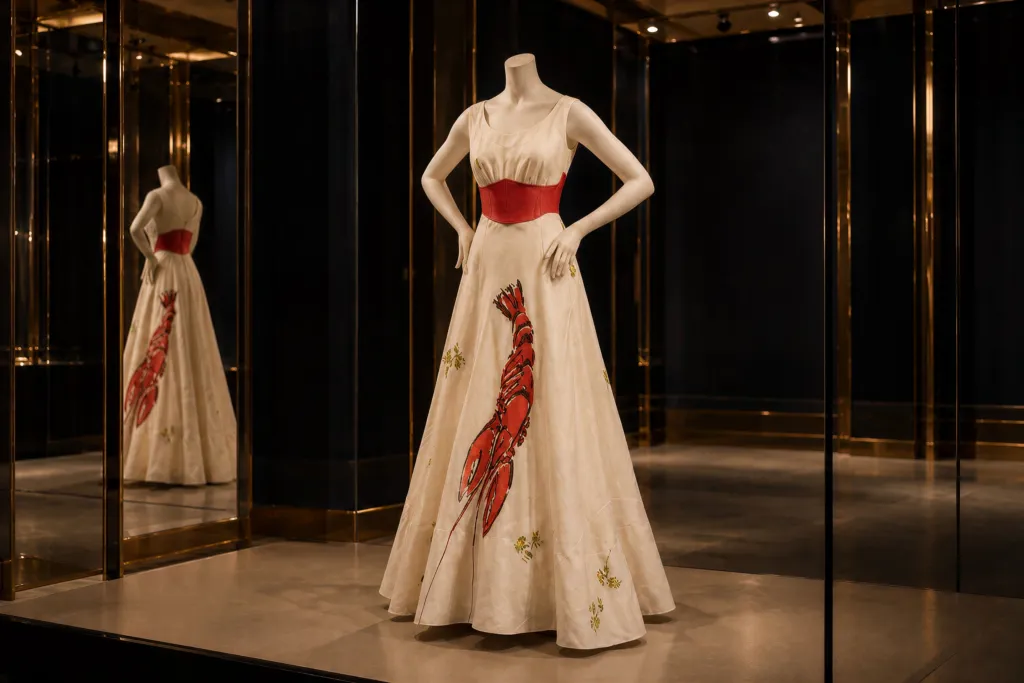
The Floating Gallery: Inside the Secret World of Superyacht Art Collections
On the world's greatest yachts, the Basquiats are beginning to outnumber the sun loungers. But keeping a Picasso safe at 20 knots, from salt spray, silverfish and flying champagne corks, is an art form in itself.
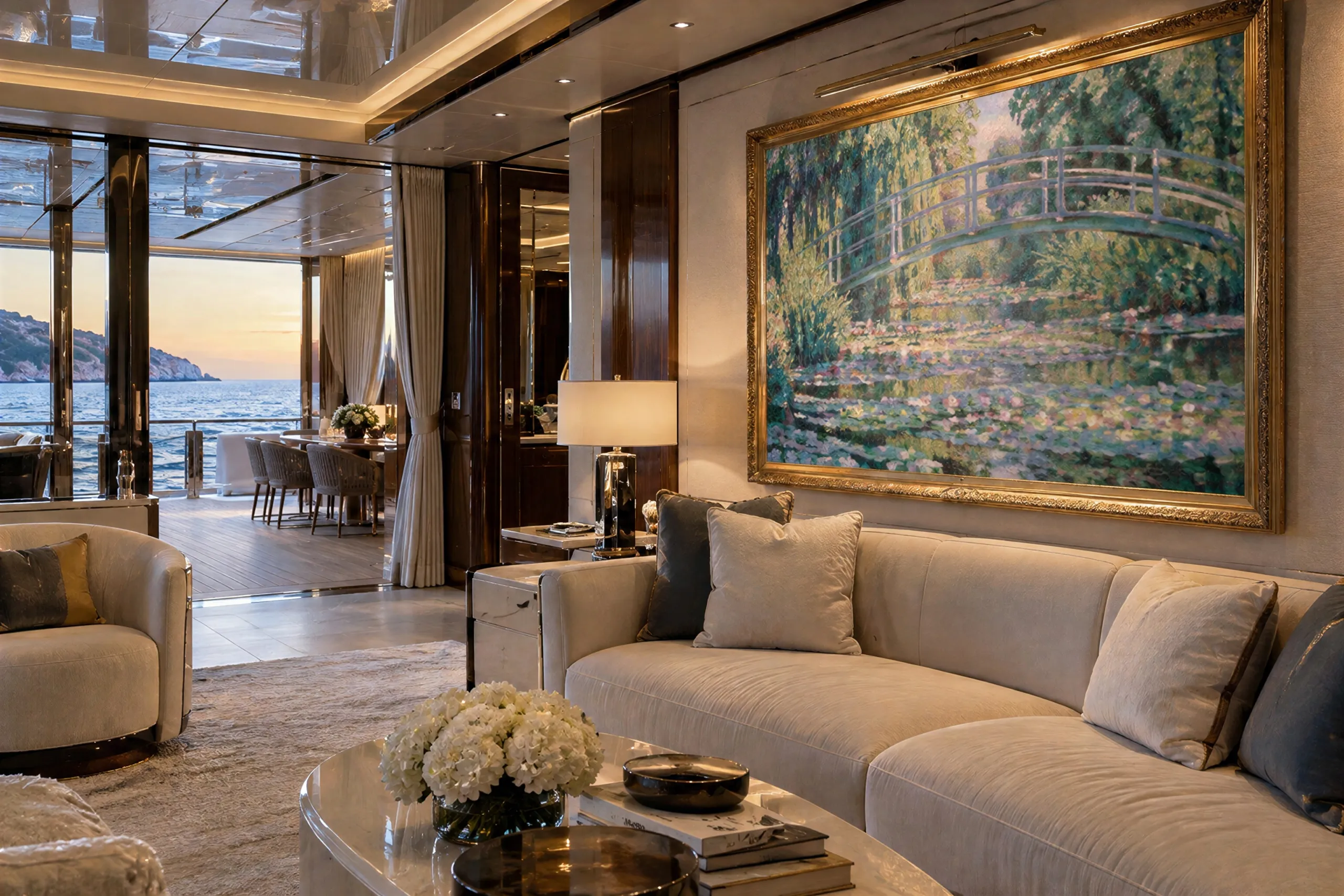
For the ultra-wealthy, a superyacht is no longer merely a feat of naval engineering; it has become the most exclusive gallery space on earth. Across the world's oceans, billionaires are hanging museum-grade masterpieces in saloons, stairwells and staterooms, and in doing so they have spawned a rarefied ecosystem of art consultants, conservators and crew trained to pour the Krug with one hand while protecting a multi-million-dollar canvas with the other.
The scale is staggering. Boat International's collectors' guide has catalogued "lesser-spotted Basquiats, £50 million Picassos and a da Vinci or two" adorning the walls of the world's finest vessels. Pandora Mather-Lees, founder of the consultancy Art on Superyachts, has described yachts with "better collections than some national museums," recalling one vessel carrying more than 800 works whose combined value exceeded that of the yacht itself, twice over.
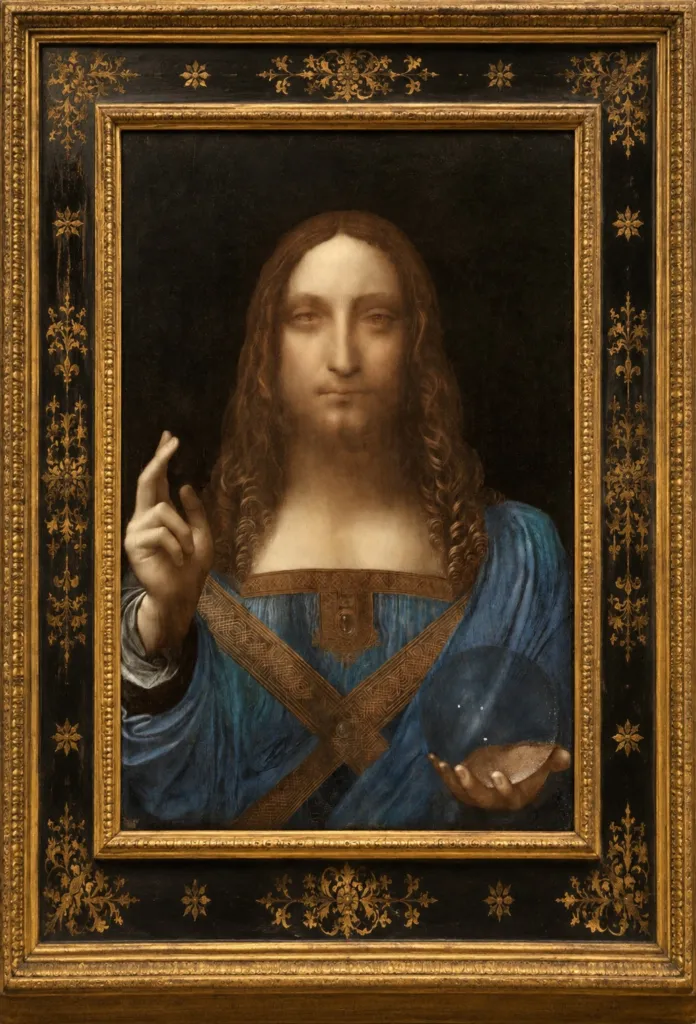
The most coveted painting once alleged to be afloat is Leonardo da Vinci's Salvator Mundi, the $450 million canvas that vanished from public view after its record-shattering 2017 Christie's sale. Reports in 2019 placed it aboard the Saudi crown prince's 134-metre Serene, but a 2024 account said it had instead been stored in Geneva since its purchase.
A Bacon on the Thames
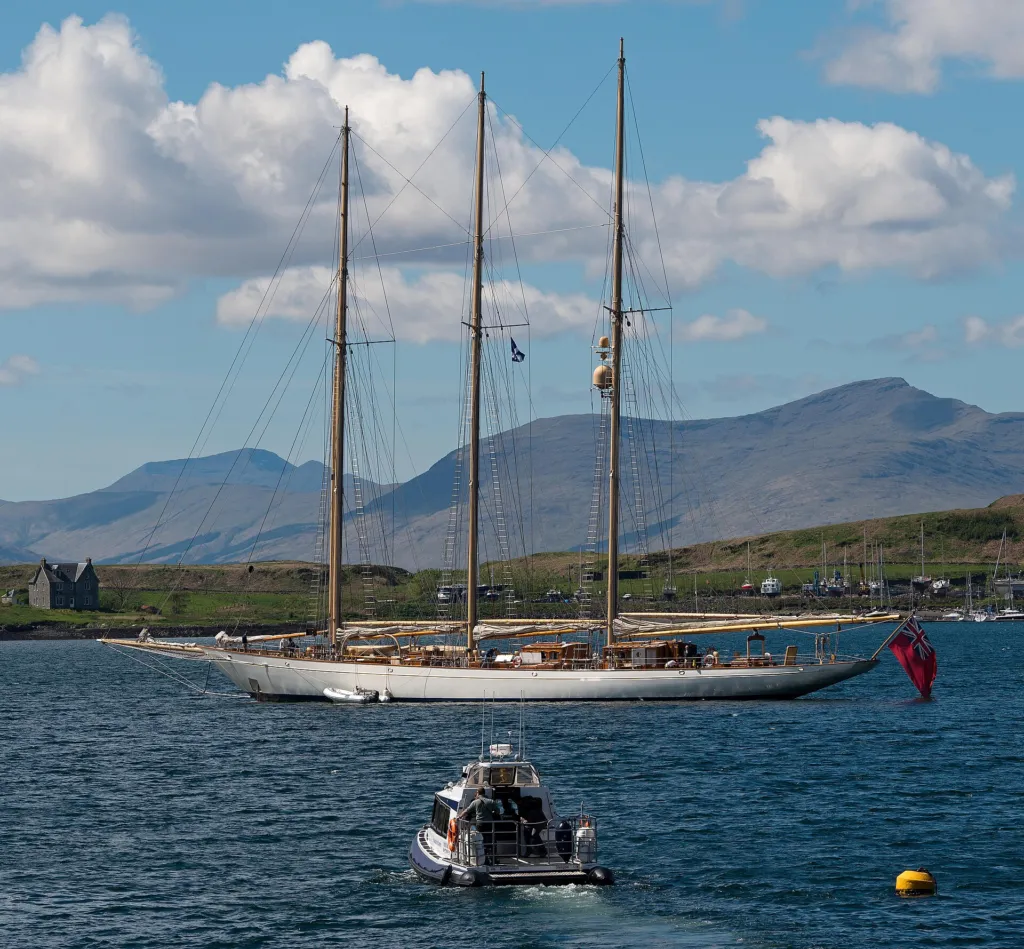
Nearby in yachting folklore, Joe Lewis's 98-metre Aviva was photographed on the Thames with Francis Bacon's Triptych 1974–1977 hanging in gold frames on its lower deck, a work he acquired for £26.3 million. Sheikh Mansour bin Zayed al-Nahyan, meanwhile, reportedly sails with several hundred pieces aboard A+, formerly Topaz, his £350 million floating palace.
Then there is Guilty, the 35-metre yacht that is itself a work of art: Jeff Koons wrapped its hull in a "dazzle" camouflage design crowned by a vast portrait of Iggy Pop as a modern Dionysus, while the interior carries works by Anish Kapoor, David Shrigley and Martin Creed for Greek Cypriot collector Dakis Joannou. Alberto Galassi, the former CEO of the Ferretti Group, keeps pieces by Botero, Salvo and Paladino aboard his Custom Line Navetta 38 Telli. And the 110-metre Ambassador, formerly named Anna when owned by Dmitry Rybolovlev, is believed to be packed with significant artworks.
Curating a collection for a pitching deck demands specialists. Space Gallery St Barth, led by Natalie Clifford, works with owners and shipyards to commission and place works "custom created to fit each opportunity and space," noting that sculptures are routinely bolted or glued down and paintings secured with L-brackets against the sea's motion. London-based Artelier offers market research, bespoke commissioning and project management for yacht interiors. Artist Jan Erika, who has painted commissions directly into superyachts, observes: "Once the artwork goes in, they become homes. The art completely changes the atmosphere and tells the owner's story."
Cornflakes on a Basquiat
Yet the sea is no respecter of masterpieces. Mather-Lees founded Art on Superyachts after noticing that crew were schooled in flower arranging and wine service but never in art. Her cautionary tales have become the industry's folklore: a Basquiat, a skull-faced canvas of the kind that sold for $110.5 million, was pelted with cornflakes by an owner's children who found it "scary," after which the crew made matters worse by wiping it down. A champagne cork once struck a multi-million-pound canvas during an impromptu crew celebration, and a £75,000 lamp was shattered in a game of "rugby pass the cushions." One crew member unwittingly left a thumbprint on an Anish Kapoor mirrored sculpture during installation and made matters worse while trying to remove it, forcing the work to be returned to the studio for re-polishing.
The "agents of deterioration" aboard a yacht are legion: direct sunlight and light bouncing off the water, humidity that breeds mould and silverfish, and salt spray that corrodes delicate surfaces. The gravest threat, though, is human error. This is why museum-grade conservation techniques have migrated to the waterline: anti-reflective, museum-quality glazing, careful positioning against UV, and climate-control systems.
Customs and Contraband
The bureaucracy is as intricate as the logistics. Conventional marine policies do not automatically cover fine art, so owners take out separate global fine-art insurance that travels with the collection. Antonio D'Orsi of Art Defender Insurance insists that a true floating gallery needs dedicated anti-intrusion systems, CCTV and bespoke policies. Moving masterpieces across borders invites export licences, VAT liabilities and, in the case of national treasures, potential criminal sanctions. Yachts have been detained for transporting artworks illegally.
Spanish banker Jaime Botín was sentenced to three years in prison and fined €91.7 million for attempting to smuggle a Picasso out of Spain aboard his sailing yacht Adix. Customs once seized a Damien Hirst butterfly work on a superyacht to verify the insects were not an endangered species. In 1999, Picasso's Buste de femme, then valued at about £4 million, was stolen from the yacht Coral Island in Antibes; it was recovered in the Netherlands in 2019, by then valued at about €25 million.
Even installation requires a sculptor's patience. Lorenzo Malfatti's pear-green onyx installation aboard the Northrop & Johnson yacht Sarastar sweeps up a staircase, unifying two decks in a single gesture. Sometimes owners overreach: one adviser rotated a Rothko through 90 degrees to fit a saloon, while another sliced a Takashi Murakami into pieces to squeeze it into a beach club. Such acts, Mather-Lees cautions, infringe the artist's moral rights.
Once the artwork goes in, they become homes. The art completely changes the atmosphere and tells the owner's story.
Jan Erika
The trend is accelerating, and turning digital. Benetti's B.Now 50M Asani carries what is believed to be the first robot-created painting on a boat, by human-machine collaboration pioneer Sougwen Chung. Ponant's ice-class Le Commandant Charcot hosts Oscillations, a nine-metre LED wall by Miguel Chevalier whose forms are sculpted by sound waves. Sanlorenzo has thrown its weight behind Art Basel, Frieze and the Venice Biennale, while owners moor off Biscayne Bay for Art Basel Miami and at the Giardini during the Biennale.
For the collector at sea, the calculus is seductive: a floating residence in which a Bacon or a Koons becomes both icebreaker and autobiography. But as the Basquiat-and-cornflakes incident proved, living with a masterpiece at 20 knots demands a crew that can tell the difference between a slashed Lucio Fontana, worth millions despite its apparent simplicity, and a canvas that merely needs dusting.